15 Best Foods That Lower Blood Sugar Naturally
No single food melts blood sugar away — anyone who tells you otherwise is selling something. But the food on your plate is still the most powerful daily lever you have. The right choices slow how fast sugar enters your blood, blunt the spike after meals, and over time make your whole system more responsive to insulin.
What follows are 15 foods with real research behind them, grouped so you can actually use them. For each one you'll get the why — the mechanism — and a simple way to fit it into meals you already eat. No exotic ingredients, no all-or-nothing rules.
📋 In This Article
- How Food Actually Lowers Blood Sugar
- Leafy Greens & Non-Starchy Vegetables
- Beans, Lentils & Whole Grains
- Berries & Lower-Sugar Fruit
- Nuts, Seeds & Healthy Fats
- Fatty Fish & Quality Protein
- Cinnamon, Vinegar & Fermented Foods
- How to Put It on Your Plate
- Where Food Stops — and What Comes Next
- Frequently Asked Questions
How Food Actually Lowers Blood Sugar
Foods don't lower blood sugar by some special "fat-burning" trick. They work by changing how fast and how high glucose rises in the first place. Three properties do most of the work.
Fiber, protein and healthy fats are the three properties that slow digestion and steady blood sugar.
Fiber slows digestion
Soluble fiber forms a gel that delays how quickly carbs break down into sugar — turning a sharp spike into a gentle rise.
Protein and fat blunt the spike
Eating protein or healthy fat alongside carbs slows stomach emptying, so glucose enters the blood more gradually.
Nutrients support insulin
Magnesium, antioxidants and polyphenols in whole foods support insulin sensitivity — how well your cells respond.
Leafy Greens & Non-Starchy Vegetables
1. Leafy greens (spinach, kale, collards)
Nearly carb-free, loaded with fiber, magnesium and antioxidants like lutein. Research on kale has shown that eating it with a high-carb meal can meaningfully reduce the post-meal blood sugar rise. They're the easiest "free" addition to any plate.
2. Broccoli & cruciferous vegetables
Broccoli contains sulforaphane, a compound studied for its modest glucose-lowering effect. High in fiber, low in carbs — a workhorse vegetable.
3. Bell peppers, cucumbers & zucchini
Low-glycemic, high-volume foods that fill you up without raising blood sugar much. They make the rest of a meal more balanced by displacing refined carbs.
💡 Simple swap
Fill half your plate with non-starchy vegetables before adding anything else. It's the single most effective structural change for steadier post-meal numbers.
Beans, Lentils & Whole Grains
4. Beans & lentils
Rich in soluble fiber, resistant starch and plant protein. In one study, adding black beans or chickpeas to a rice meal significantly lowered the post-meal blood sugar response compared with rice alone. They're among the best-value blood sugar foods there are.
5. Oats & barley
Their beta-glucan fiber is specifically linked to slower glucose absorption. Steel-cut or rolled oats beat instant; whole barley is even gentler on blood sugar.
6. Quinoa & other intact whole grains
Whole grains with their bran and germ intact raise blood sugar far less than white rice, white bread or refined flour. The key word is intact — the more processed, the faster the spike.
Berries & Lower-Sugar Fruit
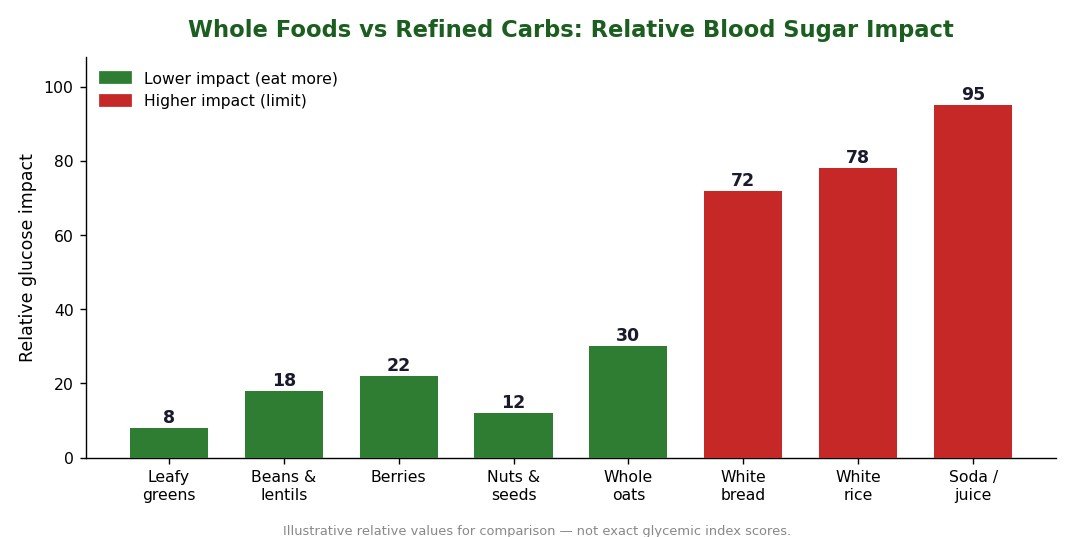
Lower-glycemic whole foods raise blood sugar far more gently than refined carbohydrates. Values illustrative.
7. Berries (blueberries, strawberries, raspberries)
High in fiber and anthocyanin antioxidants, with a low glycemic impact. A study found that eating raspberries with a high-carb meal reduced the post-meal insulin and glucose response in adults with prediabetes. The best "sweet" choice for blood sugar.
8. Apples, pears & citrus
Whole fruit comes packaged with fiber that slows its own sugar. Apples and citrus are lower-impact picks — eat them whole, never as juice, which strips the fiber and spikes glucose.
⚠️ Watch the portion
Very ripe bananas, dried fruit and large fruit portions raise blood sugar more than people expect. Pair fruit with a handful of nuts or some yogurt to soften the curve.
Nuts, Seeds & Healthy Fats
9. Almonds, walnuts & pistachios
Rich in magnesium, fiber and healthy fats. Studies show that adding nuts to a meal can lower the post-meal glucose rise and improve insulin response — a satisfying, low-impact snack.
10. Chia & flaxseeds
Loaded with soluble fiber and omega-3s. Chia seeds absorb water and form a gel that slows digestion; stir them into yogurt or oats for an easy blood sugar buffer.
11. Avocado & olive oil
Monounsaturated fats slow stomach emptying and add no glucose. Replacing refined carbs with these healthy fats is consistently linked to better post-meal control.
Fatty Fish & Quality Protein
12. Fatty fish (salmon, sardines, mackerel)
Provides protein and omega-3 fatty acids that support insulin sensitivity and reduce inflammation tied to insulin resistance. Aim for two servings a week.
13. Eggs & lean protein
Protein at a meal blunts the glucose spike and keeps you full longer, which curbs the snacking that drives numbers up. A protein-forward breakfast often steadies blood sugar all morning.
14. Greek yogurt & fermented dairy
High in protein and probiotics. Research associates probiotic foods with improved blood sugar regulation in people with type 2 diabetes. Choose plain — flavored versions hide a lot of sugar.
Cinnamon, Vinegar & Fermented Foods
15. Cinnamon, vinegar & fermented vegetables
This trio earns the last spot together. Cinnamon may help blunt post-meal spikes and support insulin signaling. Apple cider vinegar before a meal has modest evidence for lowering the post-meal rise. Fermented foods like kimchi and sauerkraut deliver probiotics linked to better glucose regulation.
| Food group | Main mechanism | Easiest way to use it |
|---|---|---|
| Leafy greens | Fiber + magnesium | Fill half the plate |
| Beans & lentils | Soluble fiber + resistant starch | Swap for some of the rice |
| Berries | Low GI + antioxidants | Default dessert |
| Nuts & seeds | Fat + fiber slow digestion | Snack or topping |
| Fatty fish | Omega-3 + protein | Twice a week |
| Cinnamon / vinegar | Blunts post-meal spike | Add before carbs |
How to Put It on Your Plate
Knowing the foods is half the battle. Here's the structure that makes them work together.
Build the plate in order
Half non-starchy vegetables, a quarter protein, a quarter intact whole grains. This ratio alone flattens most spikes.
Eat fiber and protein first
Starting a meal with vegetables and protein before the carbs measurably lowers the glucose rise that follows.
Replace, don't just add
These foods help most when they take the place of refined carbs and sugary drinks — not when they're piled on top.
Walk it off
A 10–15 minute walk after eating works with these foods to pull glucose into your muscles.
Not sure what's normal to begin with? Check our chart of normal blood sugar levels by age to see where your numbers fall, and our guide to lowering A1C naturally for the full lifestyle picture.
Where Food Stops — and What Comes Next
Food is the foundation, and for many people it's enough to move borderline numbers back into range. But food has honest limits. It takes consistency most of us struggle to maintain, the active compounds in things like cinnamon are present in small amounts, and the foods that help with one pathway often do nothing for another.
That's the gap a focused supplement can fill — not by replacing good meals, but by concentrating researched ingredients into a single daily dose that covers several pathways at once. It's the idea behind GlycoPezil™.
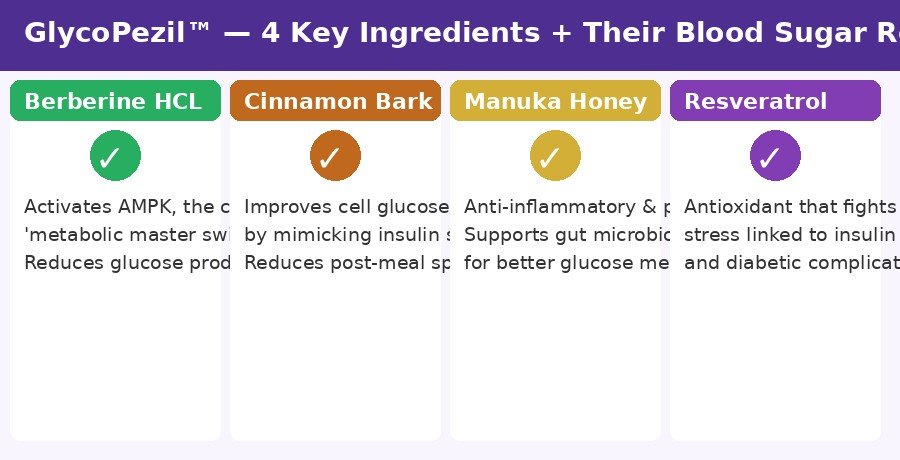
GlycoPezil™ concentrates researched ingredients into one daily formula that supports blood sugar through several pathways.
🌿 Berberine HCL
The anchor — activates AMPK, lowers liver glucose output and improves insulin sensitivity. The most studied natural compound for blood sugar.
★★★★★ High Evidence🌿 Cinnamon Bark Extract
A concentrated dose of the same cinnamon from your kitchen — supports insulin signaling and helps blunt post-meal spikes.
★★★★☆ Strong Evidence🍯 Manuka Honey
A prebiotic with anti-inflammatory properties that supports the gut and metabolic health your fermented foods aim at.
★★★☆☆ Moderate Evidence🍇 Resveratrol
The antioxidant found in berries and grapes, concentrated — it targets the inflammation behind insulin resistance.
★★★★☆ Growing EvidenceNotice the overlap: the formula echoes the best of this food list — cinnamon, the antioxidants in berries, the gut support of fermented foods — in concentrated, consistent doses. Food first, then reinforcement.
Reinforce a Blood-Sugar-Friendly Diet
GlycoPezil™ concentrates clinically studied ingredients into one daily multi-pathway formula — the everyday backup for the healthy plate you're already building. Limited-time pricing is available now.
See GlycoPezil™ Pricing →60-Day Satisfaction Guarantee · Free Shipping Available · 100% Natural Formula
Frequently Asked Questions
📚 Continue Reading
→ Normal Blood Sugar Levels by Age: The Complete 2026 Chart
→ How to Lower A1C Naturally: 7 Evidence-Based Strategies
→ 5 Daily Habits That Stabilize Blood Sugar All Day
→ Best Supplements to Lower Blood Sugar (2026): Ranked by Evidence
Want daily reinforcement beyond what food alone can give?
Visit GlycoPezil™ Official Site →