Normal Blood Sugar Levels by Age: The Complete 2026 Chart
You get a blood sugar reading back — 96, 108, maybe 130 — and the first question is always the same: is that normal for my age? It's a fair question, and the answer is more reassuring (and more useful) than most charts let on.
Here's the short version: a healthy blood sugar range is remarkably stable across adult life. A "normal" fasting number at 45 is the same as at 75. What changes with age isn't the target — it's how hard your body works to hit it, and how doctors adjust the goalposts for safety. This guide gives you the full chart, age by age, plus the honest context the numbers alone don't tell you.
📋 In This Article
The Blood Sugar Chart by Age
Let's start with what you came for. These ranges reflect the standards used by the American Diabetes Association (ADA) and the National Institute of Diabetes and Digestive and Kidney Diseases (NIDDK). They apply to adults who do not already have a diabetes diagnosis.
Normal, prediabetes and diabetes ranges for fasting glucose, post-meal glucose and A1C.
| Measurement | Normal | Prediabetes | Diabetes |
|---|---|---|---|
| Fasting glucose | 70–99 mg/dL | 100–125 mg/dL | 126+ mg/dL |
| 2 hours after a meal | Under 140 mg/dL | 140–199 mg/dL | 200+ mg/dL |
| A1C (3-month average) | Below 5.7% | 5.7–6.4% | 6.5%+ |
| Random (any time) | Under 140 mg/dL | 140–199 mg/dL | 200+ mg/dL |
💡 The key point most charts miss
These ranges are the same whether you are 35 or 85. There is no separate "normal for a 70-year-old" fasting number. Age changes your risk and your treatment targets, not the definition of a healthy glucose level.
What the Numbers Actually Mean
A single reading is a snapshot, not the whole story. Three different tests tell you three different things, and understanding each one keeps you from panicking over a high number after a big lunch.
Fasting glucose
Measured after 8 or more hours without food, usually first thing in the morning. This is your baseline — how well your body holds glucose steady when you're not eating. It's the number most charts mean by "blood sugar level."
Post-meal (postprandial) glucose
Measured about two hours after eating. A healthy body returns to under 140 mg/dL by then. Numbers that stay high after meals are often the first sign of trouble — they drift up before fasting numbers do.
A1C
A blood test that reflects your average blood sugar over the past two to three months. Because it isn't affected by what you ate this morning, it's the most reliable single number for spotting a long-term trend.
Normal Ranges Decade by Decade
Since the definition of "normal" doesn't shift, the more useful question is: what's typical, and what's worth watching, at each stage of life?
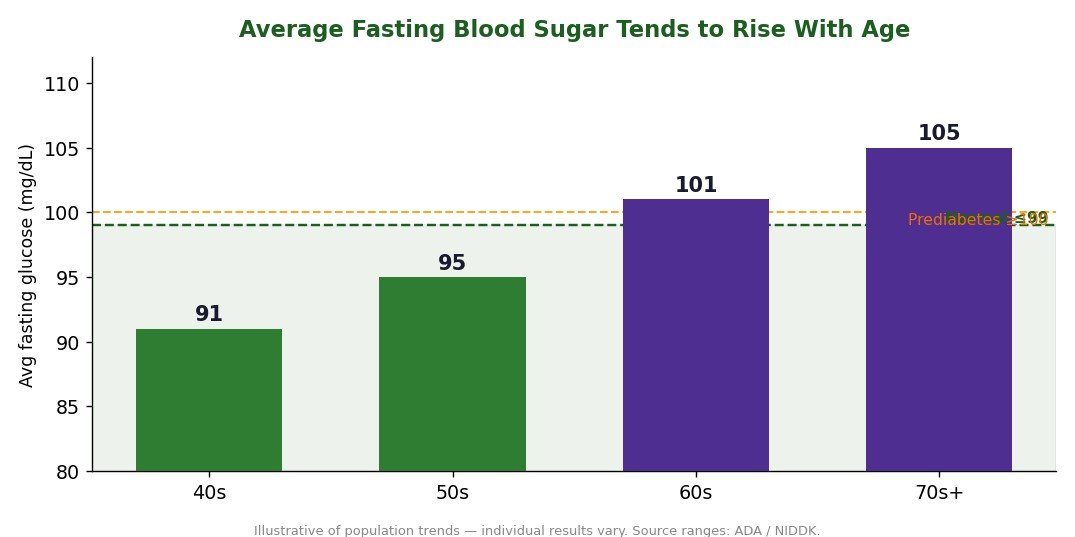
Average fasting glucose tends to drift upward with each decade — but staying inside the normal band is realistic at any age. Values illustrative of population trends.
In your 40s
Most healthy adults still sit comfortably in the 70–99 mg/dL fasting range. This is the decade where insulin resistance can quietly begin, especially with weight gain around the middle. A baseline A1C now is one of the smartest things you can do.
In your 50s
Fasting numbers may creep toward the high-90s for many people. This is the most common decade for a first prediabetes reading. The good news: caught here, it's highly reversible with diet and activity.
In your 60s
Insulin sensitivity has usually declined somewhat, and muscle loss (which helps clear glucose) accelerates. A fasting number of 100–110 is common but still counts as prediabetes — not "just getting older." It deserves attention, not dismissal.
In your 70s and beyond
The normal range is unchanged, but priorities shift. For healthy seniors, doctors aim for good-but-not-perfect control. For frail older adults, slightly higher targets are deliberately chosen because a dangerous low is riskier than a mildly elevated number.
Does Blood Sugar Really Rise With Age?
Yes — gently, and for understandable reasons. But "common" is not the same as "inevitable," and that distinction matters.
Insulin sensitivity declines
Cells respond a little less efficiently to insulin over time, so glucose lingers longer in the bloodstream after meals.
Muscle mass falls
Muscle is a major glucose "sink." As it shrinks with age and inactivity, there's less tissue pulling sugar out of the blood.
Activity and sleep change
Less movement and poorer sleep both raise glucose. These are habits — which means they're also the levers you can pull.
✅ The encouraging part
Two people can both turn 70 — one with textbook glucose control, the other struggling with insulin resistance. Age set the same starting line for both. Daily habits decided where they finished.
Your A1C Number by Age
A1C is where age genuinely does change the conversation — not the normal range, but the target your doctor sets if you're managing prediabetes or diabetes.
| Group | Typical A1C goal | Why |
|---|---|---|
| Healthy adults (no diabetes) | Below 5.7% | Standard normal range |
| Most adults with diabetes | Around 7.0% | Balances control and safety |
| Healthy older adults | 7.0–7.5% | Avoids dangerous lows |
| Frail or complex seniors | Up to 8.0–8.5% | Quality of life prioritized |
If you don't have diabetes, your goal is simple: stay under 5.7%. These relaxed targets apply only to people already being treated, where avoiding lows becomes a real concern.
When a Number Is a Warning Sign
One high reading after a birthday dinner means little. A pattern means something. Here's when a number deserves a doctor's visit rather than a shrug.
⚠️ Talk to your doctor if you see:
A fasting reading of 100 mg/dL or higher on more than one occasion, a post-meal number repeatedly over 140, an A1C of 5.7% or above, or symptoms like increased thirst, frequent urination, fatigue, blurry vision or slow-healing cuts alongside borderline numbers.
None of these mean diabetes is certain. They mean it's time for a proper assessment — which is exactly when prediabetes is most reversible.
What to Do If Yours Is Creeping Up
If your numbers have edged into the prediabetes band, the steps that move them back down are unglamorous and genuinely effective.
Confirm before you act
Repeat the test and ask for an A1C. One reading can be thrown off by stress, illness or a recent meal.
Build meals around fiber and protein
Vegetables, beans, whole grains and lean protein slow digestion and blunt the post-meal spike that drives numbers up.
Walk after you eat
Even 10–15 minutes after meals helps muscles pull glucose out of the blood — one of the most reliable, free tools you have.
Protect your sleep
Short or broken sleep raises next-day glucose. Treating sleep as part of blood sugar care isn't optional.
For a deeper dive on the food side, our guide to foods that lower blood sugar naturally breaks down exactly what to put on your plate, and how to lower A1C naturally covers the full set of evidence-based strategies.
Beyond Diet: Complete Daily Support
Diet, movement and sleep do the heavy lifting — but they take time and consistency, and many older adults find that food and exercise alone only get them part of the way. That's where targeted, research-supported ingredients earn their place: not as a replacement, but as daily reinforcement.
The catch is that no single nutrient does everything. Chromium supports insulin function but does little for spikes. Cinnamon helps with post-meal surges but not liver glucose output. This is exactly why a multi-pathway approach makes sense — and the thinking behind GlycoPezil™.
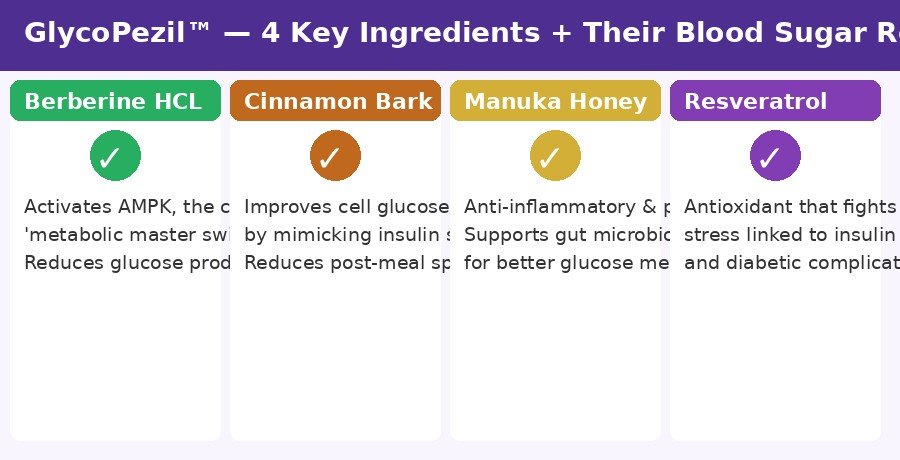
GlycoPezil™ supports blood sugar through several complementary pathways rather than relying on a single nutrient.
🌿 Berberine HCL
The anchor — activates AMPK, lowers liver glucose output and improves insulin sensitivity. The most studied natural compound for blood sugar.
★★★★★ High Evidence🌿 Cinnamon Bark Extract
Supports insulin signaling and helps blunt the post-meal glucose spikes that push your numbers up.
★★★★☆ Strong Evidence🍯 Manuka Honey
A prebiotic with anti-inflammatory properties that supports gut and metabolic health.
★★★☆☆ Moderate Evidence🍇 Resveratrol
An antioxidant targeting the oxidative stress and inflammation that underlie insulin resistance.
★★★★☆ Growing EvidenceIf your numbers are trending the wrong way despite your best efforts, combining sensible habits with multi-pathway support is a reasonable, low-risk next step worth discussing with your doctor.
Keep Your Numbers in a Healthy Range
GlycoPezil™ brings clinically studied ingredients together in one daily multi-pathway formula — built for adults who want to stay ahead of rising blood sugar. Limited-time pricing is available now.
See GlycoPezil™ Pricing →60-Day Satisfaction Guarantee · Free Shipping Available · 100% Natural Formula
Frequently Asked Questions
📚 Continue Reading
→ 15 Foods That Lower Blood Sugar Naturally (2026)
→ 10 Early Signs of Prediabetes You Should Never Ignore
→ How to Lower A1C Naturally: 7 Evidence-Based Strategies
→ Best Supplements to Lower Blood Sugar (2026): Ranked by Evidence
Want blood sugar support that works through several pathways at once?
Visit GlycoPezil™ Official Site →